
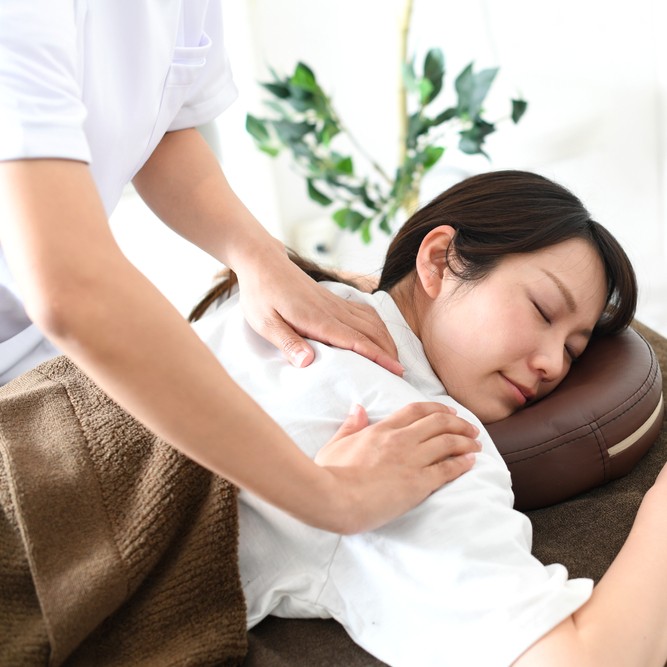
When seeking relief from muscle tension or chronic pain, many people find themselves choosing between Traditional Chinese Medical Massage (Tuina) and Western Massage Therapy (RMT). While both involve manual manipulation of the body, they are rooted in vastly different philosophies and therapeutic goals.
1. Theoretical Foundation: Anatomy vs. Meridians
The most fundamental difference lies in how each practice views the human body.
- Western Massage is primarily based on modern anatomy and physiology. It focuses on the physical manipulation of soft tissues—muscles, tendons, ligaments, and fascia. The goal is to improve blood circulation, enhance lymphatic drainage, and release physical knots.
- TCM Tuina is built upon the Meridian System. Rather than focusing solely on muscle groups, a Tuina practitioner views the body as a network of energy channels. By stimulating specific acupoints, Tuina aims to regulate the flow of Qi (energy) and Blood, removing blockages to restore the body’s internal balance of Yin and Yang.
2. Therapeutic Focus: Relaxation vs. Holistic Treatment
- Western Massage is often associated with stress reduction and relaxation. Techniques like Swedish massage are designed to soothe the nervous system and provide a sense of well-being. It is an excellent choice for general fatigue and localized muscle stiffness.
- TCM Tuina is a clinical medical treatment. In China, it is practiced in hospitals to treat not only musculoskeletal issues but also internal conditions such as digestive disorders, insomnia, headaches, and even respiratory issues. It follows the principle of “treating the root cause,” using external manipulation to influence internal organ function.
3. Techniques and Sensations
- Western Massage typically uses oils or lotions to facilitate long, gliding strokes (effleurage) and kneading (petrissage). The experience is generally fluid, rhythmic, and deeply relaxing.
- TCM Tuina involves a diverse range of manual techniques, including pushing (Tui), grasping (Na), pressing (An), and rolling (Gun). It emphasizes five key attributes: Strength, Evenness, Softness, Persistence, and Penetration. Unlike Western massage, Tuina is often performed over clothing or a cloth sheet. Patients may experience sensations of soreness, numbness, or heat (the “De Qi” sensation), which indicates the activation of the meridian.
Summary: If your goal is to unwind after a long week and soothe tired muscles, Western Massage is an ideal choice. However, if you are looking for a comprehensive clinical approach to address specific health concerns or chronic imbalances, TCM Tuina offers a unique path to recovery.