
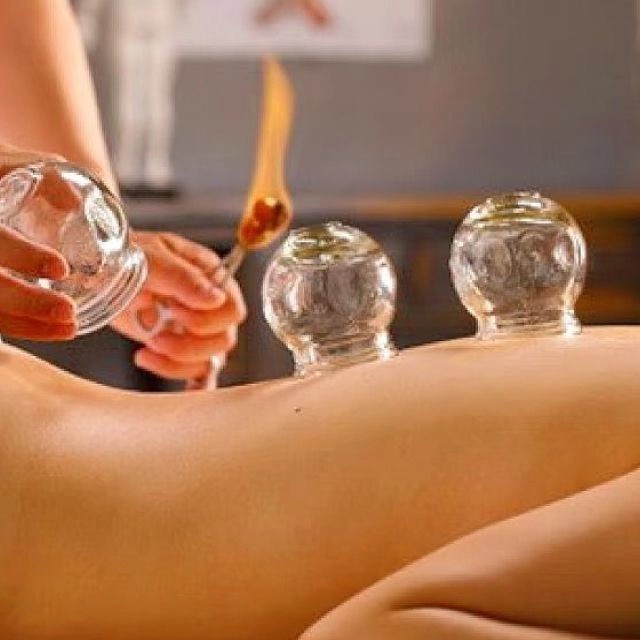
Known globally for the distinctive circular marks seen on elite athletes like Michael Phelps, Cupping Therapy (Ba Guan) is one of the most visual and effective treatments in Traditional Chinese Medicine. While it may look like simple suction, its therapeutic benefits are deeply rooted in both ancient wisdom and modern physiology.
1. The Mechanism: From “Pushing” to “Pulling”
Most manual therapies (such as massage) work by applying positive pressure—pushing into the muscles. Cupping does the opposite by using negative pressure.
- Fascial Decompression: The suction pulls the skin, fascia, and superficial muscle layers upward. This creates space between tissue layers, allowing for a level of deep myofascial release that is difficult to achieve with hand pressure alone.
- Micro-circulation Boost: The vacuum causes local capillaries to expand and increases blood flow to the area. This “micro-trauma” triggers a natural healing response, stimulating the immune system and flushing out metabolic waste.
2. The TCM Perspective: Expelling Dampness and Stagnation
In TCM, cupping is primarily used to clear blockages and remove pathogens.
- Expelling “Cold and Damp”: It is the gold standard for treating stiff muscles caused by environmental cold or humidity (such as prolonged air conditioning). It “sucks out” the internal cold trapped in joints and meridians.
- Diagnostic Colors: One unique aspect of cupping is its diagnostic value. The marks (ecchymosis) provide a map of your internal health:
- Dark Purple: Indicates blood stagnation or deep-seated cold.
- Bright Red: Suggests “heat” or inflammation in the body.
- Moisture/Steam in the cup: Indicates excessive “dampness.”
3. Safety and Post-Care
It is important to understand that these marks are not bruises in the traditional sense; they are not caused by impact and usually fade within a few days. Professional treatments typically last 5 to 15 minutes. Patients are advised to keep the treated area warm and covered after a session to prevent “wind-cold” from entering the opened pores.