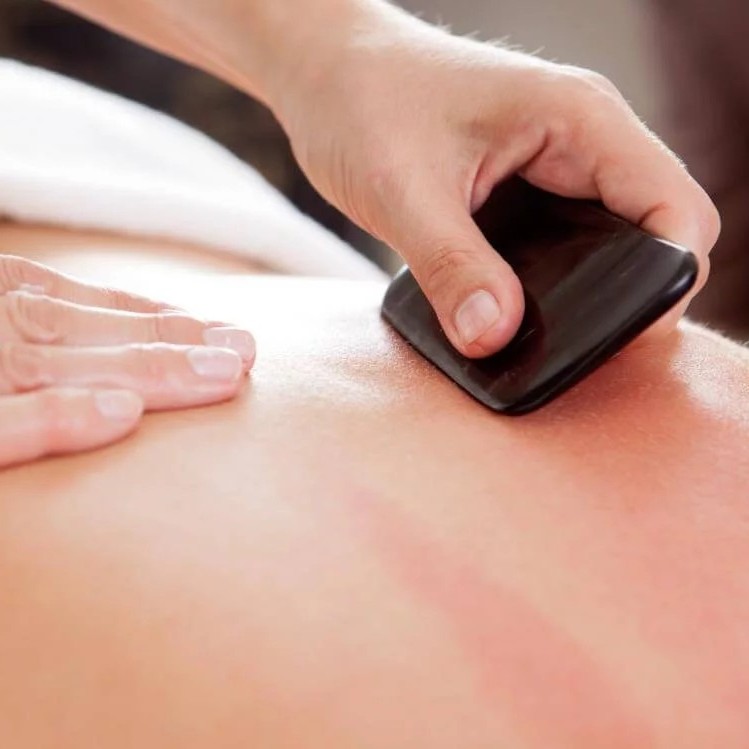
Gua Sha (Scraping Therapy) is a cornerstone of Traditional Chinese Medicine (TCM) that has gained global popularity, particularly in sports recovery and facial skincare. While the resulting red marks may look intense, the process is a highly effective way to release tension and detoxify the body.
1. The Mechanism: Friction and Microcirculation
Unlike cupping (suction) or massage (pressure), Gua Sha uses unidirectional friction.
- Micro-Perfusion: The scraping action creates intentional “micro-trauma” in the surface capillaries, resulting in small red or purple spots called “Sha” (petechiae). This process triggers a powerful anti-inflammatory and immune response as the body works to clear these tiny dots, effectively “rebooting” the local circulation.
- Fascial Release: Gua Sha acts like a “squeegee” for your tissues, smoothing out the fascia and breaking down adhesions that cause chronic pain and restricted movement.
2. The TCM Perspective: Clearing the Path
In TCM, “Sha” represents stagnant Qi, Blood, and metabolic waste trapped in the body.
- Expelling Pathogens: By stimulating the skin, Gua Sha opens the pores and provides an “exit route” for internal toxins, heat, and dampness. It is often the first line of defense against early-stage colds, fevers, heatstroke, and chronic neck or back pain.
- Diagnostic Color: The intensity of the “Sha” reflects the level of internal stagnation. Light red indicates minor tension, while dark purple suggests deep-seated blood stasis or chronic cold.
3. Tools of the Trade
Practitioners use smooth-edged tools made of Buffalo Horn, Jade, or Bian Stone.
- Buffalo Horn: Known for its cooling properties and ability to clear heat.
- Jade: Often used for facial Gua Sha due to its soothing and balancing energy.
- Lubrication: A specialized oil is always used to protect the skin and enhance the herbal penetration.